Showing posts with label Ski Guides. Show all posts

Monday, 6 April 2015

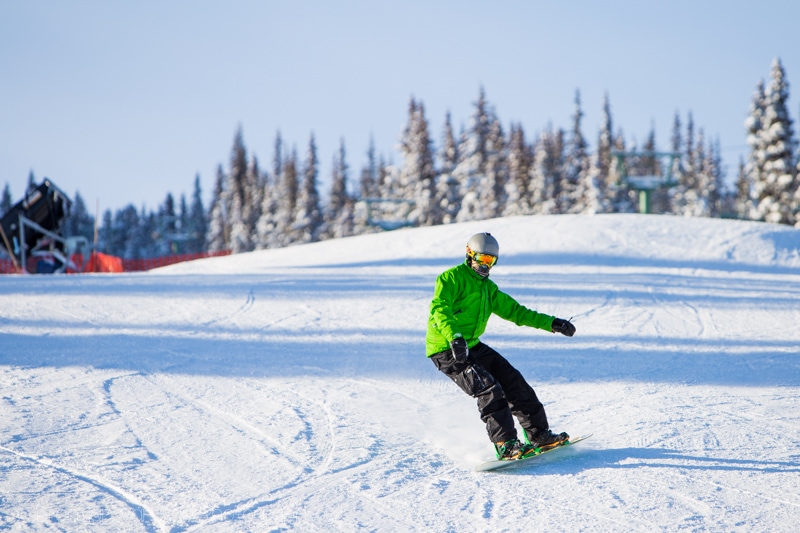
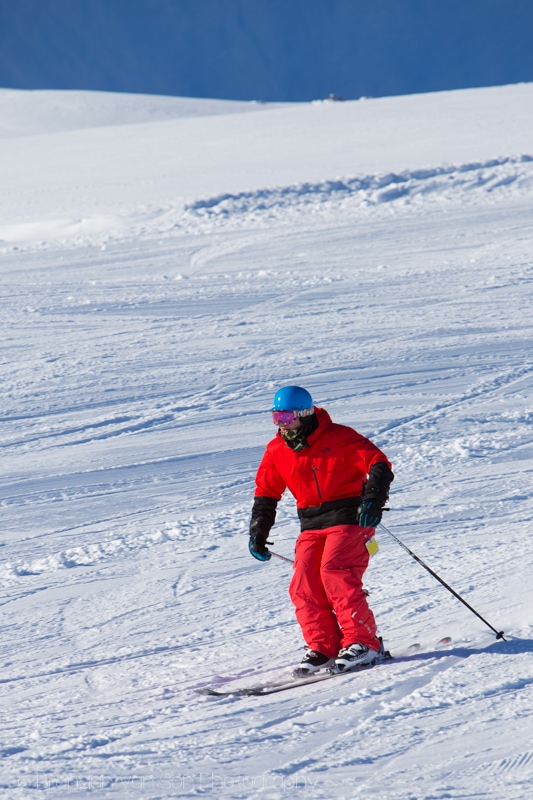
Ski and Snowboard Photography at Marmot Basin, Jasper

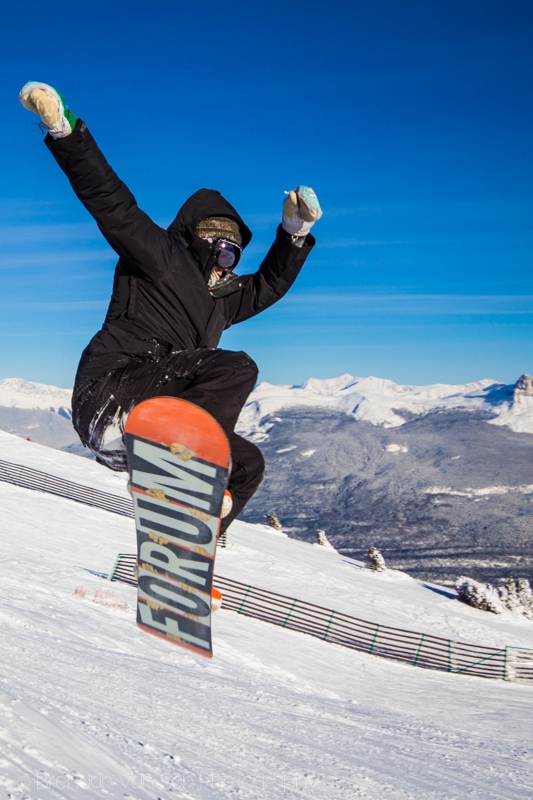
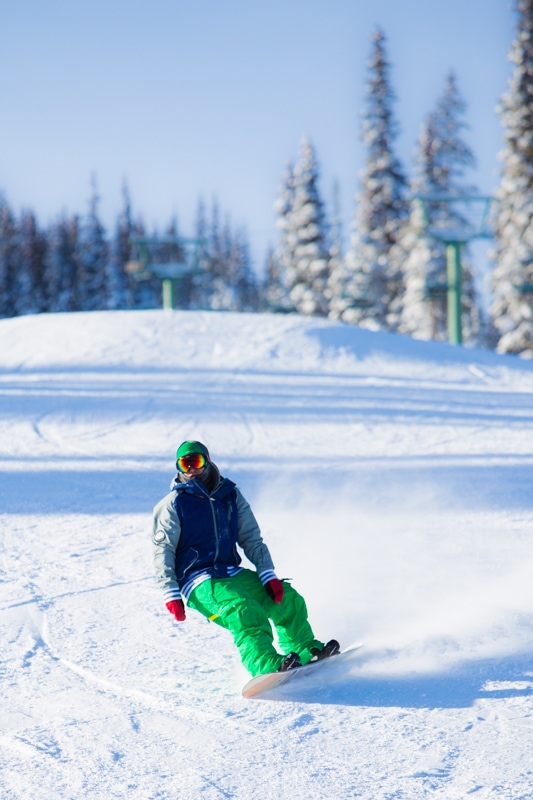
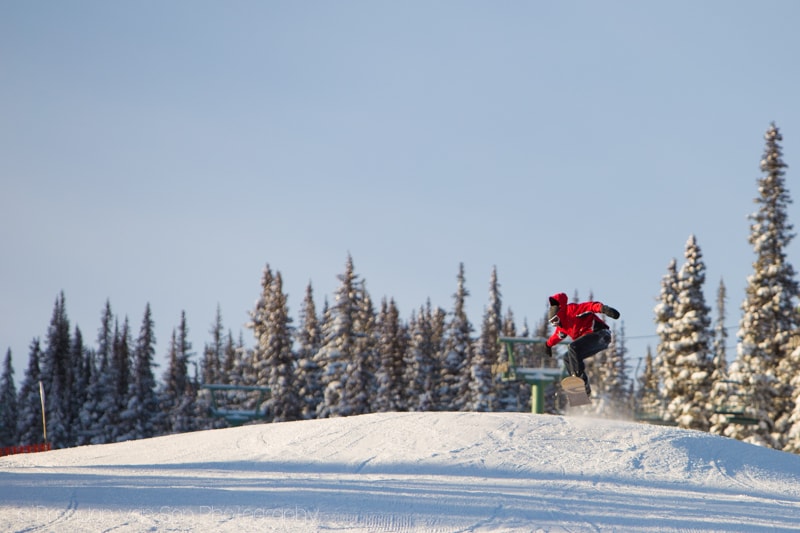
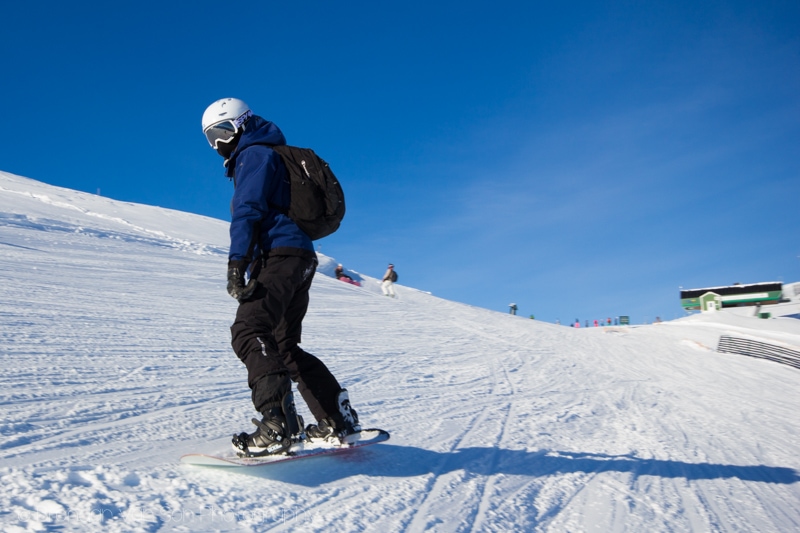
The other day, we got the chance to make our way up Marmot Basin for a second day of skiing. It was funny to see how different the conditions were just two days apart. On the first day we skied at Marmot, which is just outside of the Jasper townsite and up the side of the mountain, we had powder up to our knees and the snow was falling extremely heavily. On this day, we had perfect blue skies, almost infrared looking snow on the trees, and perfectly groomed tracks. So, well on the first day on the mountain we really just spent our time enjoying the fresh pow, we got down to a bit more business this time. I took the opportunity of blue skies to do some ski and snowboard photography. Thus, this video is a bit of a tutorial on how to shoot these ski and snowboard type situations.
Check out the video, and then more information and photos below.

Tips for Shooting Ski and Snowboard Photography

The tips for shooting ski photography has a lot of similarities to the tips for shooting winter photography that I explained last article.  But there are a couple differences, so I’ll run through it again here.
  • Get the Exposure: As is the case with all photography with a lot of snow, the exposures can get all out of whack when shooting skiers and snowboarders.  And, depending on how full your frame is with your subject, simply overexposing a couple stops wont do the trick.  Instead, you’ll need to do a couple test shots and shoot in manual.  If you shoot in aperture priority mode, your exposures will be all over the place.  So, shoot in manual and make minor adjustments from there.
  • Get Wide: A lot of action photography looks best when shot really close to the subject and wide.  It makes the subject’s moves look much more dramatic and intense.  Of course, to get close to the subject, you have to get a little bit personal with the subject.  On Marmot Basin, I just hung out near a jump and hoped people would hit it.  If they were people I knew, I could have gotten more personal with them and set up shots more specifically.
  • Get Low: The lower you get to a subject hitting a jump, the higher it looks like they are jumping.  So, if you’re photographing a snowboarder going off a jump, get right to the ground and shoot up at them.
  • Don’t Crop too Tight: If you’re using a telephoto lens, be sure not to crop too tightly.  You want to leave a bit of room in front of the skier in the frame.  This gives the subject somewhere to move and emphasizes their motion.
  • Watch your Background: I didn’t do this well in the video, nor did I mention it.  But, that was because I only had one jump to work with.  In the video, you can see that snow fence is a bit of a distraction.  A cleaner background would have been much more visually appealing.  Moreover, when you’re not going really cropped, use the background to emphasize the location: the slopes, the mountains, and the trees.  Don’t get overly focused on the main subject.
  • Watch your Batteries: Batteries drop about 50% faster when it’s really cold out.  It was -20 when we were skiing in Jasper, so the batteries die quick.  If you’re shooting action sports on the ski hill, be sure to pack extra batteries.
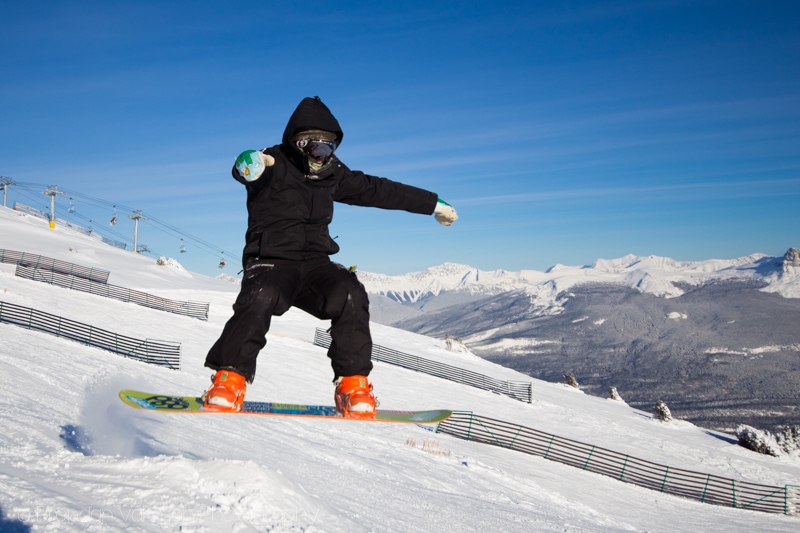
Snowboard Photography

About the Location

Marmot Basin is pretty awesome.  It might not be a massive set of chairs like Whistler is, but it’s so much more of a calm and free ski or snowboard experience.  In the two days we skied, not once did we have to wait in a line to catch a chair lift.  And, I’m not exaggerating.  We literally never once had someone in front of us at the lifts.  Moreover, you don’t have to dodge those giant groups of ski school skiers like you do in more touristy places like Lake Louise.
It’s one of the things I really like about Jasper, in general.  In Banff, the town, the hill, and the attractions really feel like they are partly over-taken by foreign tourists, which is fine.  However, in Jasper it feels like it’s almost entirely Canadian visitors, which is really nice.  It’s not to say that I have a problem with foreign tourism, I don’t.  It’s just really nice to have a place that still feels much more “local”.
In general, the sheer beauty of Marmot Basin is worth noting as well.  Constantly we were on the chair lifts looking out at the scene of snow and Rockies in complete awe.  It’s absolutely stunning there.
Ski and Snowboard Photography

More Photos from Marmot Basin

Anyways, since we had a really long drive back to Calgary after skiing, we had to cut our day pretty short.  Also, the park wasn’t open yet at Marmot Basin.  As a result, most of the images we got on this trip are fairly basic ski images, rather than intense photos.  However, I did what I could given the time restrictions, limitations, and extreme cold.  Check ‘em out.
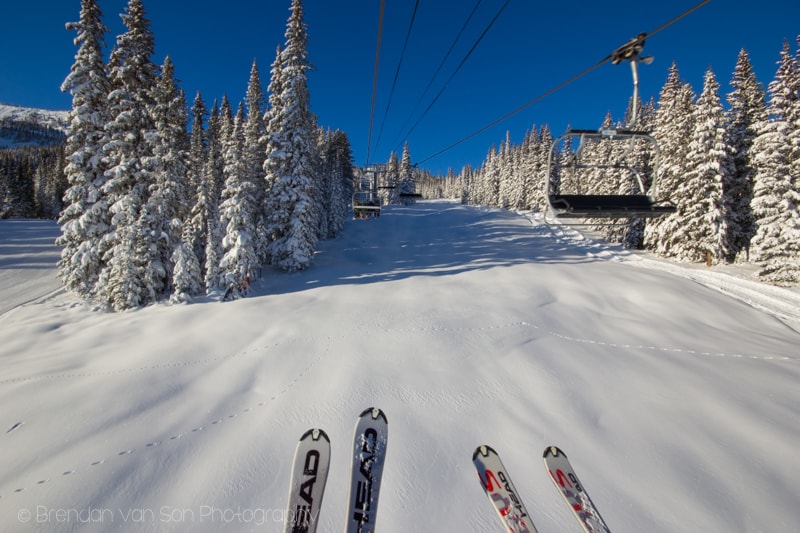
Marmot Basin, JasperMarmot Basin, JasperSki and Snowboard PhotographySki and Snowboard PhotographySki and Snowboard PhotographySki and Snowboard PhotographySki and Snowboard PhotographySki and Snowboard Photography

Tuesday, 24 March 2015

Les Deux Alpes ski resort


Les Deux Alpes in France


Introduction
One of France’s longest established and most southerly ski areas, Les Deux Alpes is one of the world’s big hitters, with 225km (140 miles) of piste served by over 40 lifts, and over 2,000m (6,500ft) of skiable vertical. All of this is topped off by granting keen skiers access to Europe’s largest skiable glacier.
Behind these headline facts, Les Deux Alpes is a big, lively village with old hotels juxtaposed with modern developments – most of which provide affordable accommodation. The skiing takes place on both sides of the valley, with lifts never more than a few steps from the main street.
The Pied Moutet base ski area is small, while the main slopes escalate high up to the glacier area, one of three in France that re-opens for summer skiing and boarding. The downside of the layout though is that the ski area is quite narrow and everyone funnels down the same way.
Les Deux Alpes is known for its off-piste opportunities, but there are enough challenging slopes for all abilities to explore. The resort’s accessibility to other nearby ski areas also means there are a whole host of options available to skiers.
Location
Les Deux Alpes sits high in the Isére department, between France's northern and southern Alps.
Website
 www.les2alpes.com

On the slopes

Wonderful views are afforded from the blue runs on Glacier du Mont de Lans, the highest point of the ski area in Les Deux Alpes. The glacier, which also boats a number of blacks, off-piste opportunities and a connection the nearby resort of La Grave, is reached via the underground funicular and draglifts.
There are 225km (140 miles) of pistes here, so there’s plenty for downhill skiers but also an impressive amount of off-piste skiing – although it's sometimes hard to find – as well as a terrain park to enjoy.
A 250m-long (273 yards) conveyor lift with a glass cover over its entire length was installed in the mid-mountain Les Crêtes area at 2,100m (6,900ft) a few seasons ago. This has created a great beginners area (that is also accessed from resort by the new Le Diable chairlift) providing a snowsure place to learn with beautiful views of the mountains. But queues for the gondola then gridlock on the easy slopes above can be commonplace. The trick is to get past this by going up to the Toura area, where skiers and boarders can hit the runs (and off-piste terrain) down towards La Fee; or head further up to the bottom of the glacier for some decent cruising.
Away from the resort, La Grave, Alpe d'Huez, Serre Chevalier and the 400km (250 miles) of the Milky Way lift pass – which extends from Montgenèvre in France to the 2006 Winter Olympic resorts of Sestriere and Sauze d'Oulx over the border in Italy – are all included on the same lift pass, and provide plentiful opportunities for all levels of ability.
As one of France’s highest resorts, snow cover is generally reliable, particularly in the glacial area – some of the lower slopes are aided by snowmaking facilities. The season runs from early December to late April.

Weather

Wind (mph)Base WeatherBase Max TempVisibility Cloud-cover Rain
Mon
2
WSW
Part Cloud Rain Thunder Day
Thundery outbreaks possible
4
°C
Moderate
40-60%
0mm
Tue
3
SSW
Part Cloud Sleet Snow Thunder Day
Patchy light snow with thunder
4
°C
Good
40-60%
0mm
Wed
6
NNW
Mod Snow
Moderate snow
2
°C
Moderate
80-100%
0mm
Thu
6
NNW
Occ Light Snow
Light snow
1
°C
Good
60-80%
0mm
Fri
13
NNW
Occ Light Snow
Patchy light snow
-
2
°C
Good
20-40%
0mm
Sat
10
N
Sunny
Clear skies
3
°C
Good
0-20%
0mm
Sun
6
NNW
Partly Cloudy Day
Partly cloudy skies
5
°C
Good
40-60%
0mm
 Last updated at 16:05, Monday 23 March
View help

Average snow depth in Les Deux Alpes

Average snow depth in Les Deux Alpes


Historical snow depth in Les Deux Alpes

Select a week:    
Historical snow depth in Les Deux Alpes [1-7 November]

Kranjska Gora ski resort


Kranjska Gora in Slovenia


Introduction
Kranjska Gora is one of Slovenia’s best known resorts, located less than 6.5km (4 miles) from both the Austrian and Italian borders, it is an annual host of a major World Cup downhill race that draws the planet’s media to this small resort each March.
That World Cup status is however a little misleading in the modern era; Kranjska Gora’s skiing was established in the late 1940s when ski areas topping out below 2,000m (6,500ft) were the norm. In the modern era the resort’s low top lift height and very limited terrain mean that its main appeal is to beginners and early intermediates looking for an unintimidating area.
But it's not just about downhill at Kranjska Gora; cross-country trails follow the lower slopes westward to the ski jumping hill at Planica. What's more, visitors will find ample facilities for tobogganing, ice skating and ice climbing here as well as the best choices of accommodation and après-ski activities of any ski resort in the country.
Location
Some 90km (56 miles) northwest of Ljubljana, Kranjska Gora sits in the Sava Dolinka valley separating the Karavanke Mountains from the Julian Alps. The borders with Italy and Austria are only 6km (4 miles) to the west and northwest respectively.
Website
 www.kranjska-gora.si

On the slopes

The ski season in Kranjska Gora officially lasts from mid-December to mid-April but in recent years has not stretched far beyond the later half of March. Snow-making cannons (covering three quarters of the ski slopes) are used to top up Mother Nature's efforts when required, provided it is cold enough.
The slopes at Kranjska Gora cater to skiers of all levels of ability, but only 2.5km (1.5 miles) of the runs are designated 'difficult' – these are mostly racing pistes at Podkoren, 3km (2 miles) to the west. The majority are suitable for beginner skiers and less experienced intermediates, with 10km (6 miles) of runs classified as blue. Freestyle snowboarders can make use of the resort’s terrain park, while cross-country skiers have around 40km (25 miles) of trails to explore.
The resort's lifts are mostly drags; but there are an increasing number of fast chairlifts, including several quads.
A number of companies offer ski tuition and rental equipment, including Skipass Travel (tel: +386 4 582 1000; www.skipasstravel.si). In total, there are four ski schools in Kranjska Gora ski resort that offer a range of lessons and courses for both skiers and snowboarders. The resort holds a strong reputation for the quality of its teaching.

Weather

Wind (mph)Base WeatherBase Max TempVisibility Cloud-cover Rain
Mon
4
ESE
Sunny
Clear skies
9
°C
Good
0-20%
0mm
Tue
6
SW
Partly Cloudy Day
Partly cloudy skies
1
0
°C
Good
40-60%
0mm
Wed
5
E
Mod Rain Swrs Day
Moderate rain at times
7
°C
Moderate
60-80%
0mm
Thu
3
S
Occ Light Rain
Patchy light rain
8
°C
Moderate
40-60%
0mm
Fri
7
NNE
Mod Rain Swrs Day
Moderate rain at times
4
°C
Moderate
40-60%
0mm
Sat
6
NNE
Sunny
Clear skies
7
°C
Good
0-20%
0mm
Sun
4
NNE
Occ Light Rain
Patchy rain possible
1
2
°C
Moderate
0-20%
0mm
 Last updated at 16:05, Monday 23 March
View help

Average snow depth in Kranjska Gora

Average snow depth in Kranjska Gora


Historical snow depth in Kranjska Gora

Select a week:    
Historical snow depth in Kranjska Gora [1-7 November]

Peisey-Vallandry ski resort


Explore Vallandry and Plan Peisey

Introduction
Although long established amongst the French skiing community for its Nordic snow sports scene in particular, it’s fair to say Peisey-Vallandry – which is made up of five small settlements – had been greatly overlooked by international guests in favour of its larger neighbour Les Arcs until relatively recently.
That changed a decade ago, however, when the Vanoise Express double-decker cable car was built to connect Les Arcs to its neighbour La Plagne. This created the giant Paradiski region – one of the world’s three biggest by some measures – with 425km (264 miles) of pistes spread across 10,000 hectares (24,700 acres).
The spot chosen for the lift station on the Les Arcs side was Peisey-Vallandry. As a consequence, international travel companies rapidly built a swathe of swish chalets and apartments. But there has been none of the over-development that has blighted other big name French resorts, according to some in the skiing fraternity.
Instead, Peisey-Vallandry’s growth has been contained and managed to be in keeping with local traditions and the environment. It is, in fact, promoted as the peaceful part of Paradiski, where its Nordic sports (such as cross-country skiing and winter hiking) are as important as its excellent terrain for downhill skiers.
Location
Peisey-Vallandry is located on the edge of the Vanoise National Park, within the Tarentaise Massif in the French Alps. The resort is at the heart of the Paradiski region, between the resorts of Les Arcs and La Plagne.

On the slopes

Linked by the Vanoise Express to the rest of the Paradiski area – where there’s glacier skiing and a massive snowmaking arsenal in place for when temperatures drop – snow cover is reliable in Peisey-Vallandry from early December to late April.
The resort has its own ski area that’s seamlessly integrated; however, it represents less than 20% of the Les Arcs ski area and less than 10% of the overall Paradiski region – only beginners or less experienced intermediates are likely to want to limit themselves to these slopes.
These local runs are mostly sunny and wooded, so are protected from the wind, but also to some extent from the crowds, as this is somewhat off the beaten track for most skiers based in Les Arcs. Along with a relaxed atmosphere, the slopes afford great views of the Mont Blanc Massif, Beaufortain and the Tarentaise Valley, and include one of Europe’s longest easy trails, the 7km-long (5 miles) La Forêt.
For everyone else, there’s a vast ski area to explore, with 425km (266 miles) of pistes divided between the two neighbouring resorts. Both offer a huge skiable vertical (2,000m/6,561ft) that ranks as amongst the best in the world. There’s something for all ability levels, from well designed beginner slopes and ‘motorway cruising’ runs, to steep technical descents, tree and mogul skiing and snowboarding, and several top-notch terrain parks. Heavy investment in state-of-the-art uplift means that most terrain is served by a fast, comfortable chairlift or gondola.
The resort is known for its Nordic skiing and other snow sports activities, which include 43km (26 miles) of cross-country ski trails for all standards, the Nordic Ski Centre’s biathlon ski school, and a children’s nursery area complete with easy-to-ride carpet lifts and a sledging hill.

Weather

Wind (mph)Base WeatherBase Max TempVisibility Cloud-cover Rain
Mon
1
WSW
Part Cloud Rain Thunder Day
Thundery outbreaks possible
6
°C
Moderate
40-60%
0mm
Tue
4
SE
Part Cloud Rain Thunder Day
Thundery outbreaks possible
6
°C
Moderate
20-40%
0mm
Wed
4
NNW
Occ Light Rain
Patchy light rain
5
°C
Moderate
60-80%
0mm
Thu
5
WNW
Sunny
Clear skies
4
°C
Good
0-20%
0mm
Fri
7
WNW
Mod Sleet Swrs Day
Light sleet showers
4
°C
Good
40-60%
0mm
Sat
6
NW
Partly Cloudy Day
Partly cloudy skies
6
°C
Good
40-60%
0mm
Sun
5
NW
Sunny
Clear skies
7
°C
Good
0-20%
0mm
 Last updated at 20:05, Monday 23 March
View help

Average snow depth in Peisey-Vallandry

Average snow depth in Peisey-Vallandry


Historical snow depth in Peisey-Vallandry

Select a week:    
Historical snow depth in Peisey-Vallandry [1-7 November]